
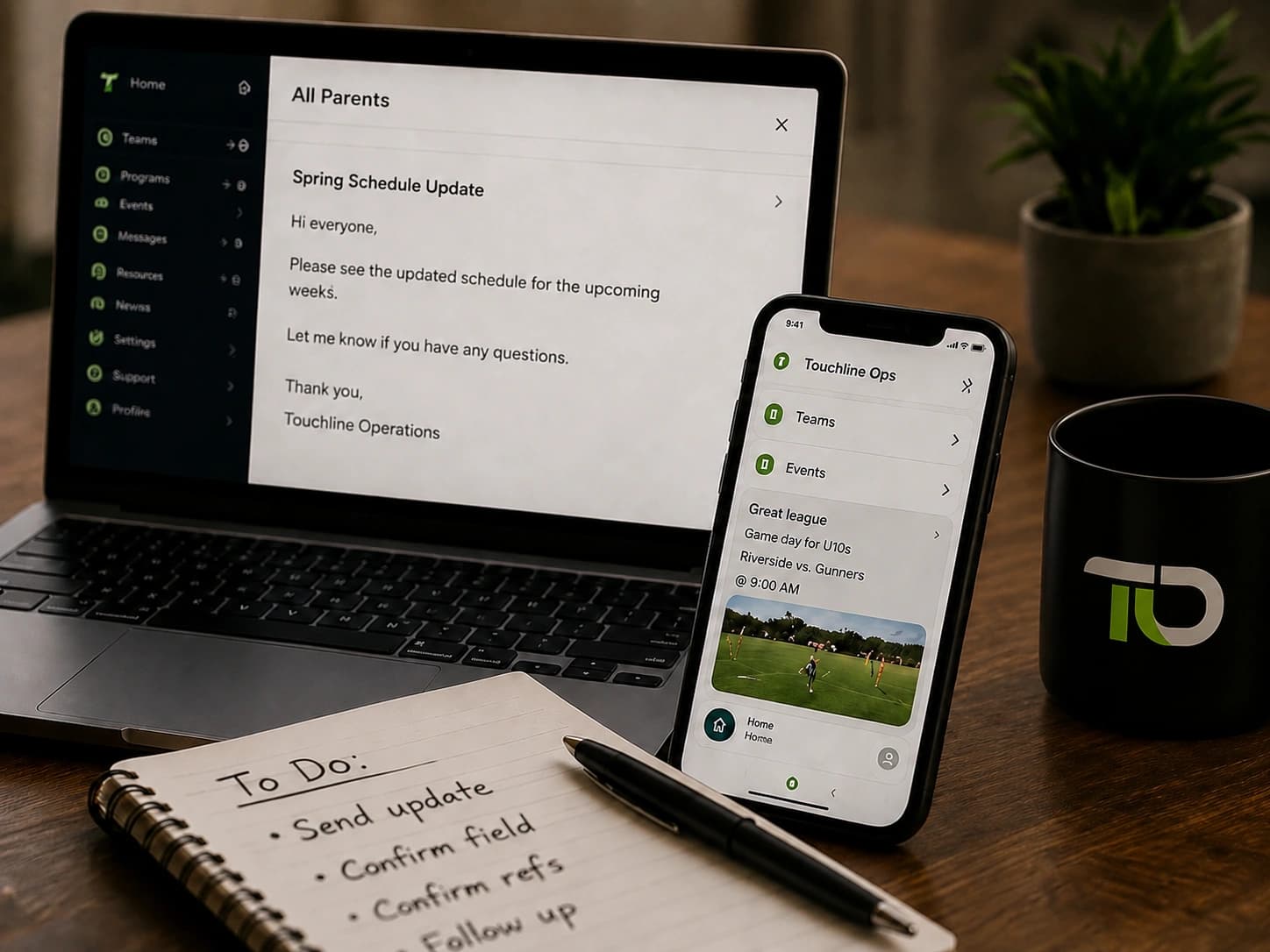
Built for the operational side of youth soccer.
Touchline Operations exists to help clubs reduce administrative strain, improve follow-through, and give directors and volunteers a more dependable operating rhythm.
The work still has to get done, even when leadership does not have the time.
Many clubs reach the point where directors, registrars, and board members are carrying too much of the administrative load directly. The issue is rarely that the work is unclear. It is that the work keeps falling back onto leadership because there is no consistent operational ownership behind it.
Family communication is treated as an operational workflow, not ad hoc inbox work.
We bring structure to family-facing updates so directors and registrars are not carrying every status request, reminder, and seasonal message personally.
- Clear cadence for reminders, deadlines, and family updates
- Reduced ad hoc inbox triage for directors and registrars
- Consistent follow-through across recurring communication cycles
Reliable support
Clubs need operational help they can count on during registration windows, roster deadlines, and active season workflows.
Clear ownership
The goal is to reduce the work that repeatedly falls back on directors, registrars, and board members.
Club-fit execution
Support is shaped around how youth soccer clubs actually operate, not around a generic assistant model.
This is not generic assistant work. It is structured operational support.
Touchline Operations is built around the recurring administrative realities of youth soccer clubs: launch windows, roster upkeep, paperwork deadlines, family communication, and season coordination. The model is designed to fit inside existing club systems while reducing the amount of day-to-day administrative pressure sitting with leadership.
- Clubs that already know the work needs to be done but need stronger execution behind it
- Organizations where directors or registrars are carrying too much administrative strain directly
- Rec and travel environments with recurring paperwork, communication, and operational complexity
- Clubs that want a dependable support layer without building a full in-house operations team
Start with a discovery call and see whether the model fits your club.
We use the first conversation to understand how your club operates today, where the administrative load is showing up, and what level of support would actually help.

The goal is to determine whether the support model matches your club’s current structure, season demands, and administrative reality.